Article: Sippy Cups for Infants: When to Start and Which Type to Try
Sippy Cups for Infants: When to Start and Which Type to Try
By Myranda Duma, Founder of Tiny Trials
You hand your baby a shiny new sippy cup. They chew the spout, wave it around, drop it over the side of the high chair, and look at you like you've just offered them a shoe. Totally normal. Learning to drink from a cup is a brand-new skill, and the first cup you buy is often not the one that sticks. The real question usually isn't which brand. It's which type of cup your baby gets along with.
The short answer: most babies can start practicing with a cup around 6 months, when they start eating solid foods. A spout cup, a straw cup and an open cup are all fine places to start. There's no single right cup, so don't be surprised if it takes a couple of tries to find the one your baby likes.
When should you introduce a sippy cup?
The American Academy of Pediatrics (AAP) recommends offering your baby a cup when they start solid foods, usually around 6 months. Bring the cup to the table at mealtimes and fill it with whatever they already drink, breast milk or formula. That tends to feel more natural to them than starting with water.
From there, there's no rush. The move away from the bottle happens slowly. Aim to cut back bottle feedings gradually so the switch is done sometime between 12 and 18 months, with your little one drinking from an open cup by about 2 years old.
If you're breastfeeding and have never used bottles, you can go straight to a cup with breast milk around 6 months. (Thinking about adding a bottle first? Lactation consultant Shannon Pratten covers when to introduce a bottle to a breastfed baby.)
Spout, straw, 360 or open: meet the infant cups
Walk down any baby aisle and you'll find dozens of "transition" cups. Most of them fall into four groups:
- Spout cups (the classic sippy cup). A lid with a soft spout, often with two handles. The most familiar step up from a bottle, especially if the spout is soft on gums.
- Straw cups. A lid with a straw. Many have a weighted straw, so your baby can drink with the cup tipped at an angle.
- Spoutless or 360 cups. No spout at all. Your baby drinks from the rim, like a regular cup, while the lid holds back spills. They're spill-proof, so the valve tip below applies to them too.
- Open cups. A small, regular cup with no lid. The messiest to learn (keep a towel handy), and the one every other cup is working toward.
Spout cups, straw cups and open cups are all fine options for a first cup, and the sippy cup is actually optional. Plenty of babies go from breast or bottle straight to a regular cup.
Spill-proof or not?
Spill-proof sounds like a dream, but there's a catch. Many sippy cups have a valve under the spout to stop spills, but that means your baby has to suck to get anything out, much like a bottle. That's why pediatricians suggest choosing a sippy cup with no valve if you go the sippy cup route: a snap-on or screw-on lid, a simple spout and two handles for little hands to grip. A weighted base that pulls the cup upright when it tips is a nice bonus.
That said, nobody needs a soggy stroller. If you want a no-spill cup for outings, a good middle ground is a cup with a removable valve, so you can take it out at home while your baby practices sipping and pop it back in for the car.
How to help your baby get the hang of it
- Offer it at mealtimes. Put the cup next to their plate and keep it mostly to meals, because little ones who carry a cup around all day can drink far more than they need.
- Start with what they know. Begin with the breast milk or formula they already drink. Between meals, a little plain water is the way to go. Skip the juice.
- Make a big deal of every sip. Cheer like they just scored a goal. Let grandparents, sitters and daycare in on the new skill, too.
- Expect protests. Pouting, tears and cup-flinging are part of the process. Resistance doesn't mean you're doing anything wrong, promise.
Why the first cup often isn't the one
Some babies take to a straw on day one and refuse a spout. Others want the spout because it feels like their bottle. Some just want to grab an open cup like the grown-ups. You can't tell from the box, and there's no one-size-fits-all cup any more than there's a one-size-fits-all bottle. The quickest way to find out is to put a few styles in front of your baby and let them show you.
What's in the Sippy Cup Trial Box
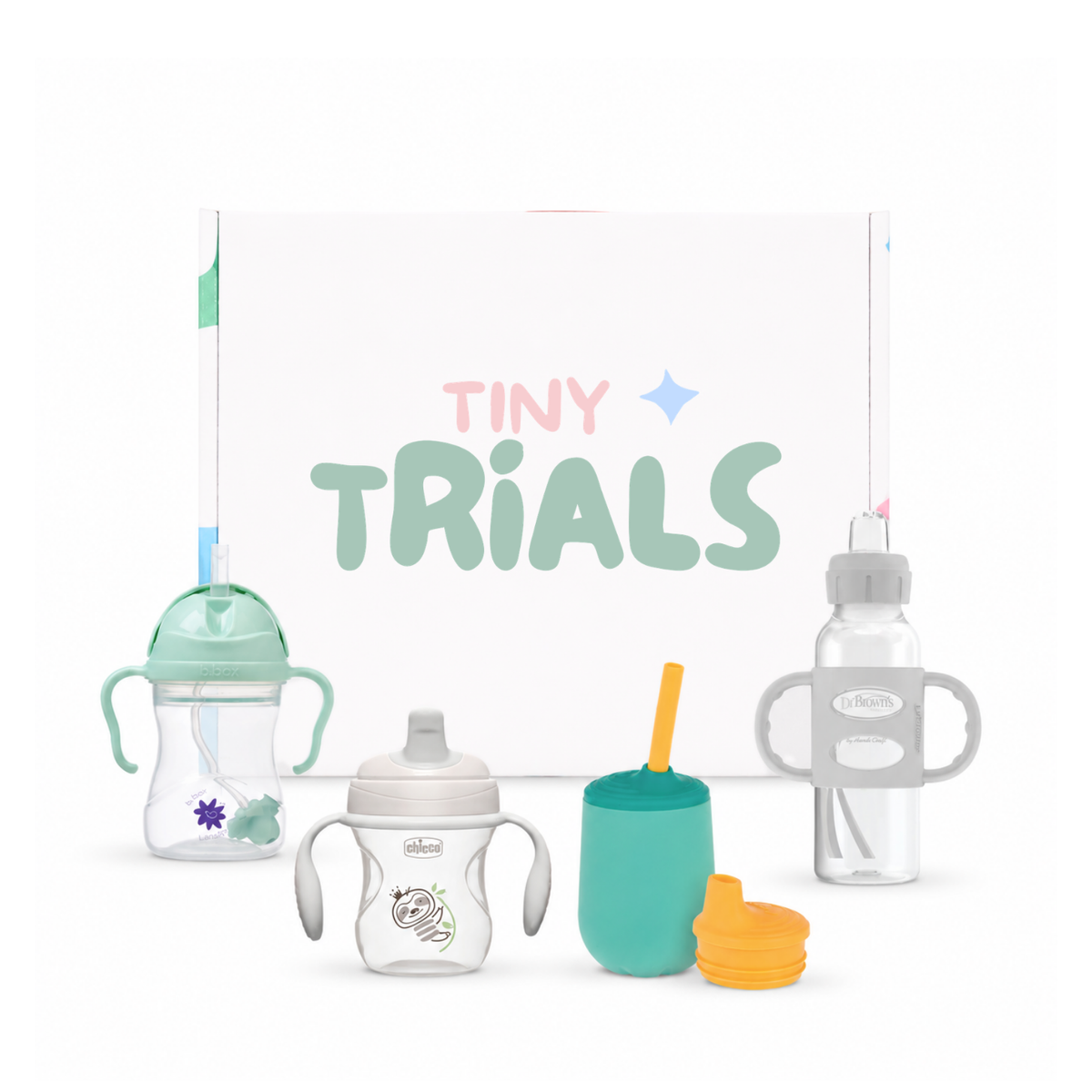
We put four cups from top, parent-trusted brands in one box, with spouts, a straw and an open-cup option, so you can compare them side by side instead of buying one, hoping, and buying again:
- Chicco Semi-Soft Trainer Sippy Cup. A semi-soft spout that's gentle on gums, removable handles, and a valve you can take out when your baby is ready to practice free-flow sipping. For 6 months and up.
- b.box + Lansinoh Straw Sippy Cup. A weighted straw so your baby can drink with the cup tipped at an angle, easy-grip handles and a flip-top lid. For 6 months and up. Best for water, as Lansinoh doesn't recommend formula in this one.
- Dr. Brown's Milestones Sippy Cup. A soft silicone sippy spout and handles on a bottle-style cup. A gentle first step for babies who love their bottle.
- Nuby 3-Stage Training Cup Set. One silicone cup with a free-flow spout lid and a straw lid. Take the lid off and it's a small open cup to practice with. For 6 months and up.
Spout, straw and open cup, all in one box, so you can find what works for your baby. Because finding their first cup shouldn't feel like guesswork.
Explore the Sippy Cup Trial Box and let your baby choose their cup.
Sippy cup FAQ
What age can a baby start using a sippy cup? Around 6 months, when they start solid foods.
Is a straw cup better than a sippy cup? Neither is the "right" one. Both are fine choices, and so are open cups. Babies often prefer one over the other, which is why it helps to try both.
Should I buy a spill-proof sippy cup? For learning, a cup without a valve is the better pick, because valves make your baby suck like they would from a bottle. A cup with a removable valve gives you both: no valve for practice at home, valve in for outings.
When should my baby stop using a bottle? Cut back gradually from around 6 months and aim to finish the switch to a cup between 12 and 18 months.
However the first sips go, messy is normal and you're doing great. You've got them, we've got you.
Sources: American Academy of Pediatrics, "From Bottle to Cup: Helping Your Child Make a Healthy Transition" (healthychildren.org); Minnesota Department of Health WIC, "Introduction to the Cup" (health.mn.gov); product details from Chicco, Lansinoh, Dr. Brown's and Nuby. This article is general information, not medical advice; check with your pediatrician about your baby.

Myranda Duma | Founder, Tiny Trials
Myranda is a mom of two who knows the invisible load parents carry, how quickly small decisions add up, and how often you are asked to commit to a product without knowing what will actually work. She built Tiny Trials from that lived experience, so families can discover what suits their baby without the guesswork. One tiny trial at a time.