
Article: When Should I Introduce a Bottle to My Breastfed Baby? An IBCLC's Guide
When Should I Introduce a Bottle to My Breastfed Baby? An IBCLC's Guide
By Shannon Pratten, RN, IBCLC | NICU Nurse, Lactation Consultant, and Founder of Milk Drunk Club
Understanding the right timing, choosing a bottle, and what to know about anti-colic designs.
If you're planning to breastfeed, there's a good chance someone has already told you when you should introduce a bottle.
"Wait until breastfeeding is established."
"Don't introduce one too early or your baby will get confused."
"Make sure you offer a bottle before six weeks, or your baby might refuse it."
Sound familiar?
After more than 20 years as a NICU nurse and 14 years as an International Board Certified Lactation Consultant (IBCLC), I've heard just about every version of this advice. I've also worked with countless families whose feeding journeys looked nothing alike.
Some babies need bottles within hours of birth. Others transition comfortably between breast and bottle at several months old. And some breastfed babies never need a bottle at all.
The truth is, there isn't one perfect week to introduce a bottle to every breastfed baby. There are, however, some important physiological considerations that can help you make a thoughtful decision for your family.
And once you've decided to introduce a bottle, there's another question waiting: Which one?
Let's talk about both.
The short answer: If you're exclusively breastfeeding and everything is going well, I often suggest considering an occasional bottle of expressed breast milk around two to three weeks postpartum, particularly if you know your baby will eventually need to accept one. But this isn't a magic window, and it certainly isn't a deadline.
Why Timing Matters: Understanding How Breastfeeding Works
Before we talk about bottles, it helps to understand what's happening between you and your baby during those first weeks of breastfeeding.
When your baby is born and your placenta is delivered, a significant drop in progesterone allows your body to begin the transition toward more abundant milk production. Over the following days, milk volume typically increases, and your body begins responding to how frequently and effectively milk is removed.
During the early weeks, your breasts are learning how much milk your baby needs. Every time your baby nurses effectively, or you express milk, you're helping establish that ongoing production.
Your baby is learning, too.
Breastfeeding involves coordinated movements of the tongue, jaw, and oral muscles to create and maintain a seal, generate vacuum, and transfer milk. Your baby is also learning to coordinate sucking, swallowing, and breathing while responding to changes in milk flow.
It's a remarkable process, and one that becomes more coordinated with practice and maturity.
This is why lactation professionals often recommend allowing some time for breastfeeding to become comfortable and effective before introducing routine bottles when there isn't an immediate need.
But there's an important distinction here.
A bottle doesn't automatically interfere with breastfeeding. What matters is how it's introduced, how milk is delivered, and whether your breasts continue receiving the stimulation and milk removal needed to support production.
If your partner gives your baby a bottle of expressed breast milk while you pump, your body is still receiving the message to make milk. But if bottles regularly replace breastfeeding sessions without pumping or hand expression, milk production may gradually decrease.
Understanding that relationship is far more useful than simply circling a date on the calendar.
So, When Should You Introduce a Bottle?
If you're exclusively breastfeeding and everything is going well, I often suggest considering an occasional bottle of expressed breast milk around two to three weeks postpartum, particularly if you know your baby will eventually need to accept one.
But this isn't a magic window, and it certainly isn't a deadline.
By two to three weeks, many mothers and babies are beginning to find their rhythm. Milk volume has increased, babies are becoming more coordinated at the breast, and mothers are getting more comfortable recognizing feeding cues.
For a baby who is latching comfortably, transferring milk effectively, producing appropriate wet and dirty diapers, and gaining weight well, this can be a reasonable time to introduce another feeding method.
You'll find recommendations suggesting waiting three to four weeks, or sometimes longer, until breastfeeding is well established. These recommendations are generally intended to protect the early breastfeeding relationship and milk production.
However, we don't have strong research demonstrating that introducing a bottle at four or six weeks produces better breastfeeding outcomes than introducing one at two or three weeks.
And while some babies transition easily to bottles at several months old, others are less enthusiastic about an unfamiliar feeding experience.
I see this in lactation practice, particularly when mothers are preparing to return to work and suddenly discover that their exclusively breastfed baby has absolutely no interest in taking a bottle.
Does introducing one at two or three weeks guarantee that won't happen? No. But for families who anticipate needing bottles, there's value in allowing time for a baby to become familiar with both feeding experiences before a separation becomes necessary.
The most important consideration isn't your baby's exact age. It's how breastfeeding is progressing and what your family needs.
A bottle is a feeding tool, not a developmental milestone.
A bottle is a feeding tool, not a developmental milestone.
Why Might a Breastfeeding Mother Choose to Introduce a Bottle?
There are plenty of reasons a family may want or need to introduce a bottle, and they don't all involve breastfeeding difficulties.
Some mothers are preparing to return to work. Others want a partner or caregiver to occasionally offer a feeding. Some simply want the flexibility to attend an appointment, spend time away from home, or share feeding responsibilities.
And sometimes bottles are medically necessary.
Babies born prematurely or requiring NICU care may need expressed milk by bottle as part of their feeding progression. Other babies may require supplementation while breastfeeding challenges are being addressed.
If a baby isn't transferring enough milk at the breast, ensuring adequate intake becomes the immediate priority, while protecting milk production and addressing the underlying feeding concerns remain important parts of the plan.
Introducing a bottle in these situations isn't a failure of breastfeeding. It's one of the tools we can use to support a baby while working toward the family's feeding goals.
On the other hand, if breastfeeding is going beautifully and you have no immediate need for bottles, you may prefer not to add pumping, bottle washing, and milk storage to your already full days.
There's no requirement to introduce a bottle simply because your baby has reached a particular age.
Will Introducing a Bottle Cause Nipple Confusion?
Let's address one of the biggest concerns I hear from breastfeeding mothers.
The term "nipple confusion" suggests that a baby who receives a bottle may become confused about how to breastfeed.
But babies aren't necessarily confused. They're responding to different feeding experiences.
Milk transfer at the breast depends on the baby's oral movements and milk-ejection reflexes. A bottle may deliver milk with less effort or a more continuous flow, depending on its design and how it's held.
Imagine a baby who has become accustomed to milk flowing quickly from a bottle. When that baby returns to the breast, where milk flow changes throughout the feeding, they may become frustrated while waiting for another milk ejection.
That doesn't necessarily mean the baby has forgotten how to breastfeed.
It may mean they've developed an expectation about milk flow.
This is sometimes described as flow preference, although bottle-related feeding difficulties can have several contributing factors.
The research surrounding nipple confusion is mixed, and we don't have convincing evidence that occasional bottle exposure inevitably causes breastfeeding problems.
What matters is paying attention to how your baby feeds, how comfortably they manage milk flow, and whether breastfeeding continues to be effective.
How Do You Choose the Best Bottle for a Breastfed Baby?
Walk down the baby aisle, and you'll find bottles marketed as breast-like, natural, anti-colic, orthodontic, slow-flow, and everything in between.
It's easy to assume that a bottle advertised as being most similar to the breast must be the best choice for a breastfed baby.
But the shape of a bottle nipple and the way a baby actually uses it are two different things.
As an IBCLC, I'm much more interested in what a baby's mouth is doing during a feed than what the packaging promises.
I'm much more interested in what a baby's mouth is doing during a feed than what the packaging promises.
Nipple Shape Matters More Than Marketing
A common misconception is that the widest bottle nipple is automatically the most breast-like.
In reality, a wide base doesn't guarantee that a baby can achieve a deep, comfortable latch.
Some wide-based nipples have an abrupt transition from a narrow tip to a broad base. Depending on the baby's oral anatomy, that shape may encourage a shallow latch or make it difficult for the baby to maintain a comfortable seal.
Other nipples have a more gradual transition, allowing some babies to draw more of the nipple into their mouths while maintaining coordinated tongue and jaw movements.
Neither design is universally perfect.
When I'm observing a bottle feed, I want to see a baby who can maintain a comfortable seal, move their jaw rhythmically, and coordinate sucking, swallowing, and breathing without excessive effort.
Milk shouldn't be continuously spilling from the corners of the mouth, and the baby shouldn't appear to be fighting the flow.
The bottle should work with the baby's feeding abilities rather than requiring the baby to compensate for its design.
Flow Rate Can Make or Break the Experience
Another important consideration is nipple flow.
A nipple labeled "slow flow" isn't necessarily slow compared with another brand's slow-flow nipple. Research has demonstrated considerable variation in milk flow rates across commercially available bottle nipples, even among those with similar labels.
This matters because a baby who is receiving milk faster than they can comfortably manage may gulp, cough, leak milk, pull away, or appear uncomfortable during feeding.
On the other hand, a nipple that delivers milk too slowly for a particular baby may result in frustration, fatigue, or inefficient feeding.
For many breastfed newborns, starting with a genuinely slow-flow nipple and observing the feeding is a sensible approach.
And don't assume you need to move up to a faster nipple simply because your baby has reached the age printed on the package.
If your baby is feeding comfortably, transferring milk effectively, and growing appropriately, there may be no reason to change.
Does My Baby Need an Anti-Colic Bottle?
Perhaps your baby squirms, pulls their legs toward their belly, burps frequently, or cries after a bottle. Naturally, you start wondering whether the bottle is causing gas.
And with so many products promising to reduce colic, it's tempting to believe that choosing the right bottle will solve the problem.
But first, we need to understand what "anti-colic" actually means.
What Makes a Bottle Anti-Colic?
Most anti-colic bottles use some form of venting system designed to reduce the vacuum that develops inside a bottle as milk is removed.
Without adequate venting, negative pressure can build inside the bottle, potentially interrupting milk flow.
Anti-colic designs attempt to manage that airflow through vents in the nipple, internal valves, or separate venting components. The goal is to maintain a more consistent milk flow and potentially reduce the amount of air a baby swallows.
That may be helpful for some babies.
However, an anti-colic label doesn't guarantee that a baby will swallow less air, experience less gas, or stop crying after feeds.
In fact, a 2026 randomized clinical trial involving more than 1,000 infants compared two different bottle-venting systems. Researchers found no significant overall difference in the primary measure of gastrointestinal discomfort between the groups, although some secondary findings suggested possible benefits for certain infants.
It's a useful reminder that bottle design is only one piece of the feeding experience.
Gas and Colic Aren't the Same Thing
Babies swallow some air during feeding, and passing gas is a normal part of infant digestion.
Colic, on the other hand, describes a pattern of prolonged, difficult-to-soothe crying in an otherwise healthy infant. Its causes aren't fully understood, and it cannot simply be attributed to swallowed air.
A baby who cries after feeding isn't necessarily experiencing colic, either.
Sometimes the concern is related to milk flow, feeding volume, latch, or immature digestive function. Other times, feeding discomfort may warrant evaluation for an underlying medical issue.
Rather than immediately purchasing a bottle marketed for gassy babies, I encourage families to look at the entire feeding experience.
Is milk leaking from the baby's mouth? Are they gulping or coughing? Is the bottle nipple collapsing? Are they taking in milk very quickly?
Those observations may tell us more than the bottle's label.
What Is the Best Bottle for a Gassy Baby?
There isn't one bottle I recommend to every family with a gassy baby.
For one baby, a different nipple flow may improve feeding coordination. For another, adjusting positioning or slowing the feeding may help. Some babies may benefit from a different venting system or nipple shape.
And sometimes the bottle isn't the primary issue at all.
This is where having the opportunity to try different bottles becomes genuinely valuable.
Rather than committing to an entire collection of one brand, families can observe how their baby responds to different nipple shapes, flows, and designs.
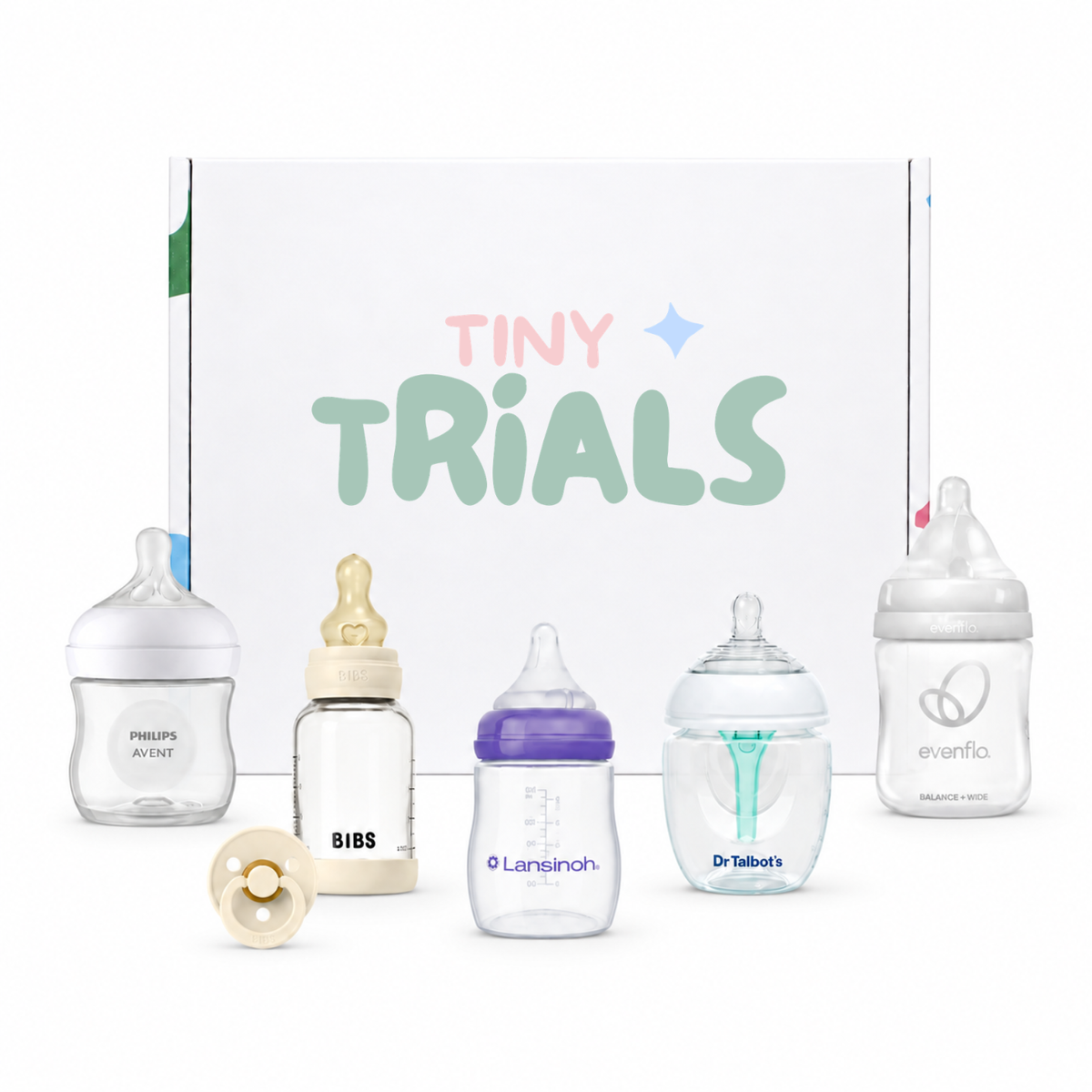
That's one reason I appreciate the concept behind the Tiny Trials Bottle Box. It gives parents an opportunity to explore different bottles without assuming that one manufacturer's design will be the perfect fit for every baby.
Because ultimately, the best bottle isn't necessarily the one with the most impressive marketing.
It's the one your baby can feed from comfortably, safely, and effectively.
Have a look at the Bottle Box to compare five newborn bottles from trusted brands side by side.
If your baby experiences persistent feeding distress, poor weight gain, frequent coughing or choking, or significant vomiting, seek an evaluation rather than continuing to switch bottles in hopes of finding a solution.
What If My Breastfed Baby Refuses the Bottle?
If you've waited several weeks or months to introduce a bottle and your baby isn't interested, you're certainly not alone.
Some babies accept a bottle immediately. Others need repeated, gentle opportunities to become familiar with a different feeding experience.
I encourage families to begin when the baby is calm, alert, and showing early hunger cues rather than waiting until they're crying and desperately hungry.
Sometimes having another caregiver offer the bottle can help, particularly if the baby strongly associates being held by their mother with breastfeeding.
Start with a small amount of expressed milk, allow your baby to explore the nipple, and keep the experience relaxed.
You can experiment with different feeding positions or nipple designs, but avoid turning bottle practice into a battle.
If your baby becomes upset, it's okay to stop and try again another time.
If refusal persists and a return to work or another separation is approaching, an IBCLC can help evaluate whether the challenge involves nipple shape, flow, oral function, or another factor.
Once You Introduce a Bottle, What About Breast Milk Storage?
For many breastfeeding mothers, introducing a bottle is also their first real introduction to pumping and storing breast milk.
Suddenly, there are new questions.
How much should I pump? How much milk should I put in each bottle? How long can breast milk stay in the refrigerator? Do I need a freezer stash?
And if you've spent any time on social media, you've probably seen those freezers filled with hundreds of ounces of milk.
I want you to know something.
You do not need an enormous freezer stash to be successful at breastfeeding or to prepare for bottle feeding.
If you're occasionally offering a bottle, you may only need enough expressed milk for that feeding and a simple plan for replacing the milk removed from your breasts.
If you're preparing to return to work, your storage needs will depend on your baby's intake, how long you'll be separated, and how frequently you'll be able to express milk.
I often encourage mothers to think in terms of practical, manageable portions rather than large quantities stored simply for the sake of building a stash.
Smaller portions can offer flexibility, particularly when your baby doesn't finish an entire bottle or needs a little more milk.
It's also worth remembering that the milk you pump while away from your baby can often be used for a subsequent separation. Your freezer doesn't necessarily need to supply every bottle indefinitely.
This is part of what inspired me to create MilkHaven™, a reusable breast milk storage system designed around smaller, feeding-sized portions and a more organized approach to managing expressed milk.
After years of helping mothers navigate pumping, bottle feeding, and milk storage, I wanted to make one part of that process feel a little less complicated.
We'll explore the practical side of building and managing a breast milk stash in greater detail in the next article.
Finding What Works for Your Baby
If there's one thing I hope you take away from this conversation, it's that introducing a bottle doesn't need to be approached with fear.
You don't need to introduce one at exactly three weeks. You don't need to purchase every bottle on the market. And you don't need to assume that a bottle advertised as breast-like or anti-colic will automatically be the right fit for your baby.
What matters is understanding your baby's feeding abilities, protecting milk production when that's part of your goal, and remaining flexible as your family's needs evolve.
Some babies will move comfortably between breast and bottle. Others will need more support.
And whether you're preparing for your first bottle, returning to work, or simply hoping someone else can take an occasional feeding, remember that you don't have to figure it all out at once.
Your baby doesn't need the most popular bottle. They need a feeding experience that works for them. And you deserve support in finding it.
References
- Pados, B. F., Park, J., Thoyre, S. M., Estrem, H., & Nix, W. B. (2016). Milk flow rates from bottle nipples used after hospital discharge. MCN: The American Journal of Maternal/Child Nursing, 41(4), 237–243.
- Pados, B. F. (2021). Milk Flow Rates From Bottle Nipples: What We Know and Why It Matters. Nursing for Women's Health, 25(3), 229–235.
- Liu, Y., et al. (2026). Feeding Bottles With Different Venting Methods and Gastrointestinal Discomfort in Infants: A Randomized Clinical Trial. JAMA Network Open.
- Centers for Disease Control and Prevention. Breast Milk Storage and Preparation.
This article is general information, not medical advice. Speak to your healthcare provider or an IBCLC about your baby's individual feeding needs.

Shannon Pratten, RN, IBCLC | Founder, Milk Drunk Club

Shannon Pratten, RN, IBCLC, is the founder of Milk Drunk Club and creator of MilkHaven™, a thoughtfully designed, reusable breast milk storage system inspired by her experience supporting breastfeeding families. With over 20 years as a NICU nurse, 14 years as an International Board Certified Lactation Consultant, and firsthand experience as a mother of three, Shannon brings both clinical expertise and a mother's perspective to her work. Through Milk Drunk Club, she helps mothers navigate breastfeeding with evidence-based education and personalized support.